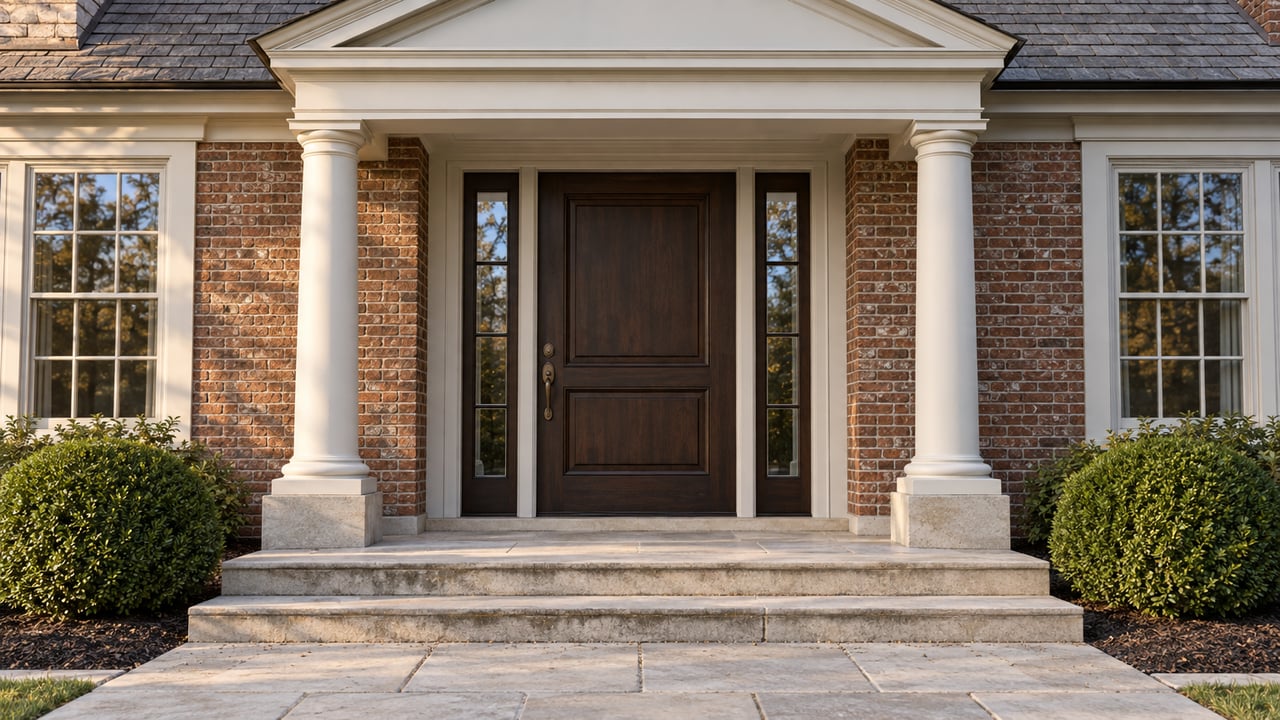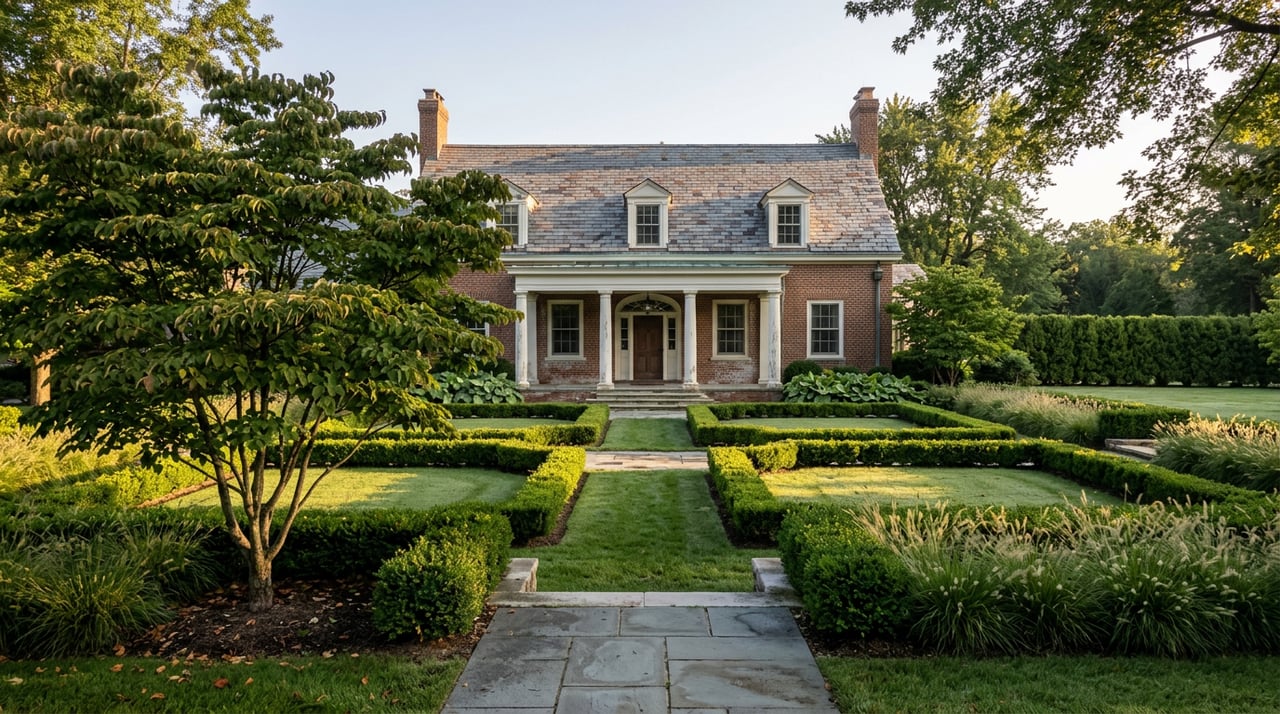
Picture two "Northville" listings, priced within a few thousand dollars of each other, both with the same square footage, both a short walk from downtown. A buyer runs the comparison, makes an offer, and moves toward closing. Then the tax estimate on the closing disclosure comes back noticeably higher than the other house. Nothing was miscalculated. The two homes simply sit in different governments.
Northville, as most buyers encounter it online, reads like one place. It isn't. The name covers a City of Northville and a separate Northville Charter Township, two governments with their own tax rates, their own boundaries, and no shared jurisdiction beyond a handful of services they choose to split. Add in the national portals, which draw their own version of "Northville" depending on which zip code or regional index they're scraping, and the median price you saw online may not describe the property you're actually bidding on.
Two governments, one name, and not much else in common
The City of Northville incorporated in 1955 and today has a population of roughly 6,119, according to the 2020 census. It's small enough, and old enough, that its boundary actually crosses two counties, Wayne and Oakland, a detail most buyers never think to check. Northville Charter Township is a different animal entirely: it split off from Plymouth Township back in 1898, now covers about 31,000 residents, and sits entirely within Wayne County. The city is legally independent of the township, bordering it to the south, and the two run separate assessing departments, separate boards, and separate tax rolls.
They do cooperate on a few fronts. The township's own description notes that it shares library and parks and recreation services with the city. But cooperation on programming doesn't mean a shared tax bill, and that's the part that catches buyers off guard.
What the tax bill actually shows
Michigan calculates property tax by multiplying a home's taxable value by the combined millage rate of every taxing authority layered on top of the parcel: county, city or township, school district, and any special districts. Based on 2025 posted rates, the City of Northville and Northville Township land in noticeably different places even for homes assigned to the same school district.
| Jurisdiction | School district | Homestead millage | Non-homestead millage |
|---|---|---|---|
| City of Northville | Northville Public Schools | 39.9709 | 57.9709 |
| Northville Township | Northville Public Schools | 35.5072 | 53.5072 |
| Northville Township | Plymouth-Canton Schools | 35.1832 | 53.1832 |
Run those rates against a $200,000 taxable value and the gap shows up in real dollars. A homestead property in the City of Northville lands around $7,994 a year. The same taxable value in Northville Township comes in near $7,101, a difference of roughly $893 a year, or about $74 a month. For a non-owner-occupied property, where the Principal Residence Exemption doesn't apply, the same comparison runs about $11,594 in the city versus $10,701 in the township. These are 2025 posted figures, and millages get set annually, so confirm current-year rates directly with Northville Township's assessing office or the City of Northville's treasurer before you build a budget around them.
There's a second wrinkle that applies no matter which side of the line you're on. Michigan's Proposal A caps how fast a home's taxable value can rise while you own it, limited to 5 percent or the rate of inflation, whichever is lower. The moment a property sells, that cap lifts and the taxable value resets to the State Equalized Value, typically about half of the new market price. That means your first tax bill as a buyer is almost always higher than the number the seller has been paying, regardless of which government is doing the taxing. Add the Principal Residence Exemption, which removes up to 18 mills of local school operating tax for an owner-occupied home, and you can see why two buyers on the same street can end up with tax bills that don't resemble each other at all.
Why your portal's "Northville" isn't my portal's "Northville"
None of the national home value sites agree on what geography "Northville" describes, and the gap between them is too large to be rounding error. One regional index reported an average Northville home value of $571,744, up 6.5 percent year over year, in data updated through the end of June 2026. A separate regional page from the same provider, tagged for an area that blends Salem Township with Northville, put the average at $606,656, up 5.2 percent over that same window. Same month, same company, two different numbers for a place called Northville. None of these are wrong exactly. They're measuring different shapes drawn around the same name.
Zip codes make the split even sharper. A recent pull of active listings by postal code showed a median list price of $488,171 in one Northville zip and $666,132 in the other, a gap of roughly $178,000 inside a single mailing address. That spread has nothing to do with the city-township line and everything to do with which subdivisions and price tiers happen to fall inside each zip's boundary, which is itself another reason a "Northville" median rarely tells you what a specific block is doing.
The number closest to actual closed transactions comes from local MLS data. A brokerage report pulling from MichRIC, updated in late July 2026, showed the area's median sale price rising from $595,000 to $620,000 year over year, with the average sale price climbing to $662,540 and closed sales easing slightly from 389 to 372. Median days on market ticked from 10 to 11. Even this figure blends parcels that could sit in either government, since MLS map areas are drawn for search convenience, not tax jurisdiction. It's a useful gauge of momentum. It's not a substitute for knowing which government actually taxes the house you're bidding on.
The next 443 homes are landing on one side of that line
The clearest illustration of why this matters right now is sitting on 48 acres near Sheldon Road and Hines Drive, where the shuttered Northville Downs racetrack is being rebuilt into a $350 million mixed residential project by Hunter Pasteur and Toll Brothers. The plan calls for 443 total housing units: 192 condos and single-family homes from Toll Brothers on the south end of the site, and a rental component from Hunter Pasteur and its partners, The Forbes Co. and Soave Enterprises, on the north end. The project also includes 15 acres of public green space and the daylighting of 1,100 feet of the Rouge River, which had been buried under cement since the 1960s.
"This is a generational asset for the city of Northville."
That's how Hunter Pasteur's COO Seth Herkowitz described the project's first completed public piece, the 10-acre Downs River Park, which opened to the public in 2026 after roughly $19.6 million in total construction cost. The park adds pedestrian bridges, walking and cycling trails, and a connection straight into downtown.
Every hearing, demolition permit, and site plan revision tied to the Downs has run through Northville's own Planning Commission, Historic District Commission, and City Council, because the project sits inside city limits, not township limits. That's not a small detail. It means all 443 of those units, once occupied, will be taxed at the city's millage rate, not the township's. A buyer comparing a new Downs condo to a comparable resale a half mile south across the township line is doing the same apples-to-oranges comparison the portal data illustrates, just with a much larger price tag attached.
What this means before you write an offer
A few habits close the gap between what you see online and what you'll actually pay.
Confirm the parcel's taxing jurisdiction directly rather than relying on the zip code or mailing address, since Northville's zip codes cross both the city and township boundaries. Ask which school district applies to the specific parcel, since that changes the millage stack even within the same government. Run your own post-sale tax estimate instead of trusting the seller's current bill, since Proposal A resets the taxable value the moment the deed transfers. And if you're comparing a listing near downtown to one of the new units at the Downs, factor in that the Downs falls under city taxation specifically, which may change your total carrying cost even if the purchase prices look similar.
A few questions worth asking directly
Does the City of Northville have higher property taxes than Northville Township? Based on 2025 posted rates, yes, for homestead property assigned to Northville Public Schools. Millages are set annually, so confirm current figures with each jurisdiction's assessing office before you rely on last year's numbers.
Why do home value sites show such different numbers for the same city? Each site draws its own version of "Northville," whether that's a regional index blending in neighboring townships, a strict city boundary, or a zip code that happens to include both high- and low-priced pockets. None of them are measuring identical geography.
Will homes in the Downs redevelopment be taxed the same as homes just across the township line? No. The Downs sits inside City of Northville limits, so those units carry the city's millage rate, which differs from the township rate applied to comparable homes just south of the boundary.
If you're comparing "Northville" listings and the numbers aren't lining up the way the portals suggested, that's usually the reason, not a mistake in your math. Kamran Boushehri works both sides of the city-township line daily and can tell you exactly which government will be taxing the home you're considering before you write the offer. Schedule a consultation to get the numbers that actually apply to your address.